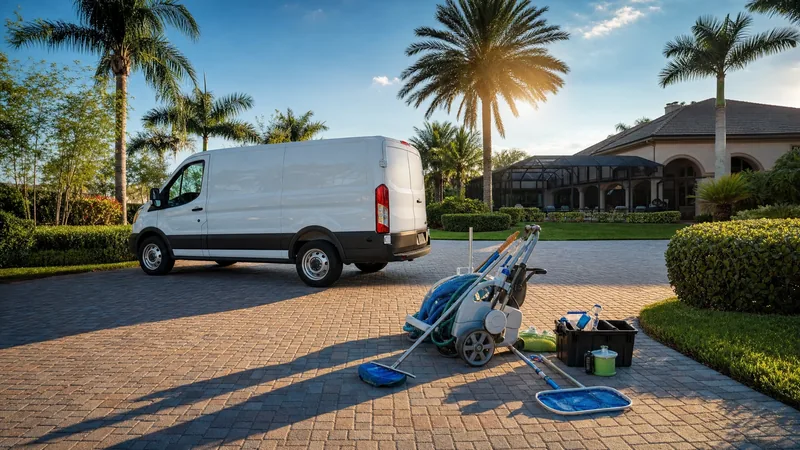
How to Start a Landscaping Business in Florida: Fertilizer and LCLM Certificates
How to Start a Landscaping Business in Florida: Fertilizer and LCLM Certificates
Florida does not issue a general landscaping license. The state has no general business license, and basic lawn mowing, raking and cleanup do not require a state license. What changes the picture is the work you actually perform. Once you apply fertilizer for hire, apply pesticides to beds and ornamentals, or install and repair irrigation, you need a specific certificate or license. That is where most new landscapers get tripped up, so this guide focuses on those credentials alongside the business filings and local permits you will need.
If you have searched for a florida landscaping license or florida landscaping license requirements, the honest answer is that the requirements depend on your services. The two credentials most landscapers need are the FDACS Limited Commercial Fertilizer Applicator certificate and the FDACS Limited Commercial Landscape Maintenance (LCLM) certificate. Irrigation work is handled separately through the Construction Industry Licensing Board (CILB).
Disclaimer: This article is informational content, not legal or tax advice. Fees, training requirements and rules can change, so confirm each one with the agency named before you spend money or take on a client.
Materials and Information You Need Before You Start
Gather the following before you file anything or sign up for a course:
- A business name that ends in LLC, L.L.C. or Limited Liability Company if you plan to form an LLC
- A list of every service you plan to offer, sorted into mowing and cleanup, fertilizer, pesticide, irrigation, and tree or hardscape work
- A Florida street address for your registered agent, which cannot be a P.O. Box
- A budget that covers the LLC filing fee, the registered agent fee, the fertilizer and LCLM exam fees, a local business tax receipt, and any insurance you need
- A federal Employer Identification Number from the IRS, which you will usually need for bank accounts, payroll and tax filings
- Your target counties and cities, so you can check local fertilizer restrictions and business tax rules for each one
Florida Landscaping Credentials at a Glance
Use this table to map your services to the right requirement before you buy a single course.
| Service | Florida requirement | Where to confirm |
|---|---|---|
| Basic mowing, raking, cleanup | No state license for basic lawn maintenance | Check local rules where you work |
| Fertilizer applied for hire | FDACS Limited Commercial Fertilizer Applicator certificate | Florida Department of Agriculture and Consumer Services (FDACS) |
| Bed and ornamental pesticide work | FDACS LCLM certificate | FDACS |
| Turf or weed-n-feed work | Not covered by the LCLM certificate | Ask FDACS which credential applies before you bid |
| Irrigation installation and repair | CILB specialty license | Construction Industry Licensing Board (CILB), administered under the Department of Business and Professional Regulation (DBPR) |
| Selling taxable goods or services | Sales and use tax dealer registration before you begin business | Florida Department of Revenue |
Step 1: Decide Which Services Need a Credential
Start with your service menu, not your business name. A company that only mows and blows does not need a state certificate to get started. A company that offers a full bed maintenance program with fertilizer and insect control needs both the fertilizer certificate and the LCLM certificate, and any irrigation repair needs a CILB license. Write down every task you expect to bill for in the first year. You will save money by earning only the credentials your revenue plan actually depends on, and you can add more later.
Step 2: Form Your LLC Through Sunbiz
Most landscapers form a Florida limited liability company (LLC) to separate personal assets from business debts. The Florida Department of State, Division of Corporations (Sunbiz) handles this filing. Here is what to expect:
- Formation document: Articles of Organization
- Filing fee: $100, plus the required $25 registered agent designation below ($125 total)
- Name rules: The name must end with LLC, L.L.C. or Limited Liability Company and must be distinguishable from names already on the state's records. Search the name first at the Sunbiz search page. Do not assume the name is approved until you receive a filing acknowledgment.
- Name reservation: If you need time to finish paperwork, you can reserve a name for 120 days for $25.
- Registered agent: Every Florida LLC must designate a registered agent with a physical Florida street address and no P.O. Box. The agent must sign to accept the appointment. An entity cannot serve as its own registered agent, but an owner or officer can. The designation carries a required fee of $25 for an LLC, and changing the agent later costs the same amount.
- Processing: No guaranteed turnaround is published. The Division says online filings are processed in the order received, and images of electronically filed documents post within 3 business days of processing. Expedited service is not offered. If you need to file in person, the walk-in service is at 2415 N. Monroe Street, Suite 810, Tallahassee, Monday to Friday, 8am to 5pm, where most requests are completed while you wait.
File through Sunbiz eFile at the official link in the resources section below. Keep the filing acknowledgment, because banks, insurers and the local tax office will ask for it.
Tax note: Florida has no personal income tax and no state franchise tax on LLCs. An LLC taxed as a partnership or disregarded entity generally does not file a Florida corporate income tax return, but a Florida Partnership Information Return is required if one or more owners is a corporation. An LLC classified as a corporation for federal tax purposes pays the 5.5% Florida corporate income/franchise tax. Ask a CPA which classification fits your situation.
Step 3: Register a Fictitious Name If You Operate Under a DBA
If your trade name differs from your LLC name, such as operating as Coastal Lawn Care while your LLC is named Smith Holdings LLC, you need a fictitious name registration. The fee is $50 to register and $50 to renew. Registration is valid for 5 years and expires on December 31 of the fifth year. You file statewide with the Division of Corporations, not with your county. Florida also requires that the name be advertised at least once in a newspaper in the county of your principal place of business, though you do not file proof of the advertisement.
Step 4: Earn the Limited Commercial Fertilizer Applicator Certificate
Anyone who applies fertilizer for hire in Florida needs the FDACS Limited Commercial Fertilizer Applicator certificate. This applies to the individual performing the work, so every crew member who spreads or applies fertilizer for pay needs to be certified, not only the owner. The requirements are:
- Complete the GI-BMP class, which covers Green Industries Best Management Practices
- Pass the exam with a score of at least 75%
- Pay the $25 fee
- Keep track of the certificate's validity, which runs 4 years
Set a calendar reminder for the expiration date. Letting a certificate lapse while crews are still applying fertilizer is a common and avoidable violation.
Step 5: Earn the FDACS LCLM Certificate
The Limited Commercial Landscape Maintenance (LCLM) certificate allows you to apply pesticides in bed and ornamental settings for hire. The certificate requires 6 hours of training and a $150 exam fee. Confirm current course providers, scheduling and renewal rules with FDACS before you enroll.
Know the limit of this credential. The LCLM certificate does not cover turf or weed-n-feed products. If a prospective client wants a lawn weed control program, that is a different scope of work, and you should confirm which certificate applies with FDACS before you quote the job or buy product for it.
Step 6: Handle Irrigation Work Through CILB
Irrigation is a specialty regulated by the Construction Industry Licensing Board (CILB). If you plan to install, repair or modify sprinkler systems for pay, confirm with CILB which license class applies and what experience, exam and insurance requirements come with it. Many landscapers handle this by subcontracting to a licensed irrigation contractor until they qualify themselves. Do not add irrigation repairs to a maintenance contract until you have confirmed your authority to perform them.
Step 7: Get the Local Business Tax Receipt
Florida has no general statewide business license. Many cities and counties levy a local Business Tax Receipt (BTR) for the address where you operate, and the receipt is issued under Chapter 205 of the Florida Statutes. Understand that the BTR is a tax, not a competency license. It does not prove you can apply fertilizer or pesticides, and not every county or city levies one. Contact the local tax collector or business tax office for each jurisdiction where you will work, and ask whether your home base, your storage yard and your service area each need a receipt.
Step 8: Register for Sales Tax If You Sell Taxable Goods
If your company sells taxable goods, such as mulch, plants, or fertilizer sold to customers, you must register as a sales and use tax dealer with the Florida Department of Revenue before you begin business. The state sales tax rate is 6%. Local surtaxes may apply in some areas, so confirm the rate for each county where you sell. Ask your CPA whether specific landscaping charges are taxable, because the answer depends on how you bill them.
Step 9: Plan Around Summer Fertilizer Restrictions
Many coastal counties and cities have summer fertilizer restrictions, which are blackout periods when applying certain fertilizers is prohibited. The exact months and product rules vary by jurisdiction. Before you sell a fertilizer program, check the rules for every county and city where your clients live, and build those dates into your service calendar and contracts. A contract that promises a summer feeding in a restricted area creates a problem you cannot fix with a better crew.
Step 10: Build a Compliance Calendar
Write these dates into one shared calendar:
- Annual report: Filed each year between January 1 and May 1. The fee is $138.75. A $400 late fee applies to reports received after May 1, for a total of $538.75.
- Dissolution deadline: Failure to file by the third Friday in September leads to administrative dissolution, so do not wait for a reminder letter.
- Fertilizer certificate: Renew before the 4-year validity period ends.
- Fictitious name: Renew between July 1 and December 31 of the expiration year.
- Local business tax receipt: Confirm the renewal date with each city and county.
Common Mistakes to Avoid
- Assuming a name is approved: Wait for the filing acknowledgment before you print vehicle wraps or sign leases.
- Using a P.O. Box for the registered agent: The agent needs a physical Florida street address.
- Certifying only the owner: Each crew member who applies fertilizer for hire needs the certificate.
- Selling weed-n-feed under the LCLM certificate: Turf and weed-n-feed work is outside that scope, so verify the credential before you bid.
- Bidding irrigation work without a CILB license: Subcontract or confirm your authority first.
- Ignoring the annual report: A late filing adds $400 and risks administrative dissolution.
- Operating under an unregistered trade name: If the name on your truck is not your LLC name, register it.
- Skipping the local check: A business tax receipt or fertilizer blackout in one city can change your entire spring schedule.
Expected Results
Holding the right certificates and filings may help you bid on fertilizer and bed maintenance work with more confidence, and it can help you show clients and insurers that your crew has completed required training. It may also reduce the chance of stopping work on a job because a credential is missing. These outcomes depend on your market, your pricing, your crew and how carefully you manage the compliance calendar, so treat them as possibilities rather than promises.
When to Talk to a Professional
Talk with a Florida attorney before you choose an LLC structure, sign a commercial lease, or take on a contract with unusual liability terms. Ask a CPA how to classify your LLC for federal and Florida tax purposes and whether your sales are taxable. Ask an insurance agent about general liability and workers' compensation coverage for your crew. Use the agency contacts above for certificate and license questions, and do not rely on a forum post or a competitor's advice for a rule that carries a penalty.
Official Florida Resources
- Florida Department of State, Division of Corporations (Sunbiz)
- Sunbiz business name search
- Sunbiz eFile for Florida LLCs
- Fictitious name registration
- Florida Department of Revenue
- Florida Department of Revenue sales tax registration
- Florida SBDC Network
For FDACS fertilizer and LCLM certificates, CILB irrigation licensing, and DBPR questions, search for the agency by name and confirm current fees, course providers and exam details on its official pages before you enroll.
Disclaimer: This article is informational content, not legal or tax advice. Confirm all fees, deadlines and requirements with the appropriate agency or a qualified professional before you act.
Keep exploring: related Florida guides
- How to Start a Junk Removal Business in Florida
- How to Start a Lawn Care Business in Florida
- How to Start a Cleaning Business in Florida
- How to Start a Mold Remediation Business in Florida
- How to Get a Contractor License in Florida
- How to Start an LLC in Florida
- Florida Business License
- How Much Does It Cost to Start a Business in Florida
- All Florida business types
- Every Florida guide in one place