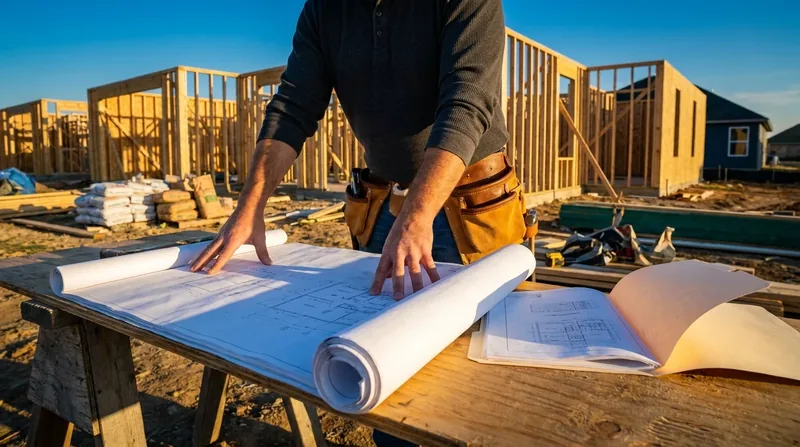
How to Get a Contractor License in Florida: Certified vs Registered
How to Get a Contractor License in Florida: Certified vs Registered
If you plan to bid on construction work in Florida, your first decision is which kind of contractor license fits the work you want to do. Florida offers two main paths. A certified license comes from the state and lets you work anywhere in Florida. A registered license comes from a local government and lets you work only in the jurisdiction that issued it. Both require real experience and proof of financial responsibility, but the exam, the approval process, and the reach of the license are different. This guide covers both paths, the documents you need, and the mistakes that cause delays.
Informational only, not legal or tax advice. This article explains general Florida licensing rules as of its publication date. Requirements change, and the Florida Construction Industry Licensing Board (CILB) and your local building department make the final decisions on any application. For business structure, tax treatment, or a complicated situation, talk with a Florida attorney or CPA before you file.
Certified vs. Registered at a Glance
The Florida Department of Business and Professional Regulation (DBPR) oversees the Construction Industry Licensing Board. The CILB issues state certified licenses. Local counties and cities issue registered licenses. If you search for "florida cilb" or "cilb florida," you are looking for the state side of this system. Registered licenses sit with local government, so the local building department is your main contact for that path.
| Feature | Certified license | Registered license |
|---|---|---|
| Who issues it | State, through the CILB at DBPR | The county or city that registers you |
| Where you can work | Anywhere in Florida | Only in the jurisdiction that issued it |
| How competency is shown | State exam | Local competency requirements, which vary |
| Best fit | Contractors who work across county or city lines or plan to grow | Contractors who work in one local area |
Florida contractor licenses also fall into categories. The CILB groups licenses into Division I and Division II. Choose the category that matches your work before you apply, because the experience you must show, the exam you take, and the scope of work your license covers all depend on it. Confirm the current category list on the DBPR site.
Materials and Documents You Need
Gather these items before you start. Missing or inconsistent documents cause more delays than anything else.
- Proof of experience: employer letters, permits you pulled as a foreman or supervisor, project records, and a dated work history. Vague descriptions are a common reason for follow-up requests.
- Education records, if you plan to use a degree route: an official transcript or diploma from a four-year degree in engineering, architecture, or building construction.
- Credit information: your FICO score and a copy of your credit report, so you can test against the 660 threshold described below.
- Financial responsibility course certificate, if your score falls below 660. The alternative is a 14-hour financial responsibility course under rule 61G4-15.006.
- Insurance: certificates showing the general liability and workers' compensation coverage the application requires. Confirm required coverage amounts with your insurance agent and with DBPR.
- A business entity, if you will not operate as a sole proprietor. An LLC is the most common choice.
- A federal Employer Identification Number (EIN), which you can obtain directly from the IRS at no charge.
- Identification documents, as the application specifies.
Step-by-Step: How to Get a Florida Contractor License
Step 1: Choose Certified or Registered
If you expect to work on jobs in more than one county or city, a certified license is usually the better fit because it is valid statewide. If you will work in one local area only, a registered license may be simpler, but confirm the local process first. Whichever path you choose, know that a local business tax receipt is a separate requirement that applies to the address where you operate. Step 9 covers it.
Step 2: Confirm Your Category
Match your trade to a Division I or Division II category on the DBPR site. Do this before you collect experience documents, because the experience you must prove depends on the category you select. Choosing the wrong category can cost you an application fee and months of work.
Step 3: Qualify Your Experience Under Section 489.111
Florida Statute 489.111 sets out the experience routes. One route requires four years of experience, including at least one year as a foreman. Another route allows a four-year degree in engineering, architecture, or building construction, plus one year of experience. Your documentation must show the work clearly, with dates, roles, and project types. Confirm the current experience standard and how the board verifies experience before you rely on any single route.
Step 4: Meet the Financial Responsibility Requirement
Florida requires applicants to show financial responsibility. You can meet this with a FICO score of 660 or higher. If your score is lower, you can complete a 14-hour financial responsibility course under rule 61G4-15.006 instead. Pull your credit report early so you have time to address errors or take the course before you apply.
Step 5: Set Up Your Business Entity
Most contractors form an LLC with the Florida Department of State, Division of Corporations (Sunbiz). The Articles of Organization carry a $100 filing fee. Your LLC name must end with "Limited Liability Company," "LLC," or "L.L.C." and must be distinguishable on state records. A registered agent with a Florida street address must sign the filing, and designating the agent costs $25 for an LLC. If you need to hold a name while you prepare, a name reservation costs $25 and lasts 120 days. You can file online through Sunbiz eFile at https://dos.fl.gov/sunbiz/start-business/efile/fl-llc/.
Do not assume your name is approved until you receive a filing acknowledgment. The Division does not offer expedited filing service, and no guaranteed turnaround is published. Walk-in service is available at 2415 N. Monroe Street, Suite 810, Tallahassee, Monday to Friday, 8am to 5pm. For a business entity, the license is held through a qualifying agent who meets the board's requirements. Confirm how the qualifier must be named on the application.
Step 6: Submit Your Application to DBPR
Certified applications go through DBPR's licensing system at https://www.myfloridalicense.com. Enter your business name, FEIN, and address exactly as they appear on Sunbiz and IRS records. A mismatch is one of the most common reasons an application gets stalled. Check the current application fee on the DBPR site, since this article does not list a verified figure for it.
Step 7: Pass the State Exam
Certified applicants must pass the state exam for their category. DBPR sets the exam format, passing standard, fee, and scheduling process, and these can change. Confirm all four on the DBPR site before you study or book a seat. Ask DBPR in writing whether you may schedule before or after your application is approved. Study the exam content outline for your category, not general construction knowledge alone. Florida exam questions focus on Florida rules, so review the statutes and rules that govern your trade.
Step 8: For a Registered License, Work Through Your Local Jurisdiction
Registered licenses are issued locally, so call the building department in each county or city where you plan to work. Ask what competency showing they require, whether they use a local exam or another review, what fees apply, and how long their process takes. Processes differ from one jurisdiction to another. A registered license covers only the jurisdiction that issued it, so do not assume it lets you work across the county line.
Step 9: Register Your Local Business Tax Receipt and Any Tax Filings
Many Florida cities and counties require a local business tax receipt (BTR) for the address where you operate. Under Chapter 205, the BTR is a tax, not a competency license, and it does not prove you can perform the work. Not every county or city levies it, so check with the local government where you operate. If you sell taxable goods or services, you must also register as a sales and use tax dealer with the Florida Department of Revenue before you begin business: https://floridarevenue.com/taxes/eservices/Pages/registration.aspx. Ask a CPA how these filings apply to your contracts.
Reciprocity: If You Are Licensed in Another State
Florida has limited reciprocity provisions for some contractors licensed in other states. Whether you qualify depends on the license you hold, the other state's rules, and Florida's current requirements. Do not assume you qualify. Ask the CILB in writing before you pay fees or schedule an exam, and get the answer in a form you can keep with your records.
Recent Licensing Changes You Need to Know
Local trade licenses ended on July 1, 2025. Under Section 163.211, grandfathered local trade licenses ended on that date. Painting, flooring, handyman, tile, and stucco work now needs only a local business tax receipt, according to the statute. Confirm with your local government whether any other local requirement applies to your trade.
The handyman exemption has a $2,500 limit. Section 489.103(9) exempts certain handyman work from state contractor licensing, subject to a $2,500 limit. Read the statute and confirm with DBPR what work counts and how the limit is measured before you rely on it. Dividing one job into several smaller contracts to stay under the limit is risky, and the board may treat it as an unlicensed job.
HB 803 changed single-family permitting, but it is not a license exemption. House Bill 803 (2026, ch. 2026-63, effective July 1, 2026) created a permit exemption for certain single-family residential work under $7,500. The exemption does not cover electrical, plumbing, mechanical, gas, structural, or flood-zone work. It also does not exempt anyone from licensing. Treat it as a permit question only, and confirm the details with your local building department.
Watch for emergency orders after storms. After a hurricane or other emergency, DBPR may issue emergency orders that change licensing or work rules for a period of time. Check the DBPR site for current orders before you accept storm-related work.
Common Mistakes to Avoid
- Choosing the wrong category. The category controls the experience and exam requirements, so a mistake here wastes time and fees.
- Treating a local business tax receipt as a license. The BTR is a tax receipt under Chapter 205. It does not prove competency.
- Assuming a registered license works statewide. It covers only the jurisdiction that issued it.
- Missing the annual report. An LLC annual report is due each year between January 1 and May 1 and costs $138.75. After May 1, a $400 late fee applies, bringing the total to $538.75. Failing to file by the third Friday in September leads to administrative dissolution.
- Stretching the handyman exemption. Work above the $2,500 limit or in a regulated trade still requires the proper license.
- Reading HB 803 as a license exemption. It addresses certain permits only.
- Using inconsistent business names. Match the name across Sunbiz, the IRS, your insurance policy, and the DBPR application.
- Waiting until the end to line up insurance. Get certificates early so an application is not held up while you wait on an agent.
- Relying on old exam or fee information. Forum posts and blog articles often show outdated figures. Check DBPR directly.
What to Expect After You Apply
A complete, well-organized application may move through review more smoothly, but Florida does not publish a guaranteed turnaround for every step covered here, so plan with some flexibility. The exam schedule, application review, and any follow-up requests can each add time. Once licensed, you may be able to pull permits and bid work within your category, subject to local rules. Certified and registered licenses may also carry renewal and continuing education requirements. Confirm the renewal cycle and requirements on the DBPR site before you start taking jobs.
How to Verify a Florida Contractor License
Before you hire anyone, search the license through the DBPR license lookup at https://www.myfloridalicense.com. Check the license type, category, status, and expiration date. For a registered license, confirm the issuing jurisdiction and whether it covers the job location. An active status matters more than the name on a business card, so verify before you sign a contract or accept a deposit.
Next Steps
Start by deciding whether a certified or registered license fits your plans. Then confirm your category, document your experience, check your credit against the 660 threshold, and set up your business entity. Use the DBPR site for the current exam, fee, and renewal details, and use your local building department for registered licenses and local receipts.
Reminder: This article is informational and is not legal or tax advice. Florida licensing rules can change, and your situation may involve issues this guide does not cover. Consult a qualified Florida attorney for legal questions about your business structure and licensing, and a CPA for tax questions before you file.
Keep exploring: related Florida guides
- Florida Annual Report
- How to Get a Resale Certificate in Florida
- Florida Home-Based Business Laws
- How to Get an EIN in Florida
- How to Become a General Contractor in Florida and Start Your Business
- How to Start an Electrical Contracting Business in Florida
- How to Start a Plumbing Business in Florida
- How to Start an HVAC Business in Florida
- Every Florida guide in one place