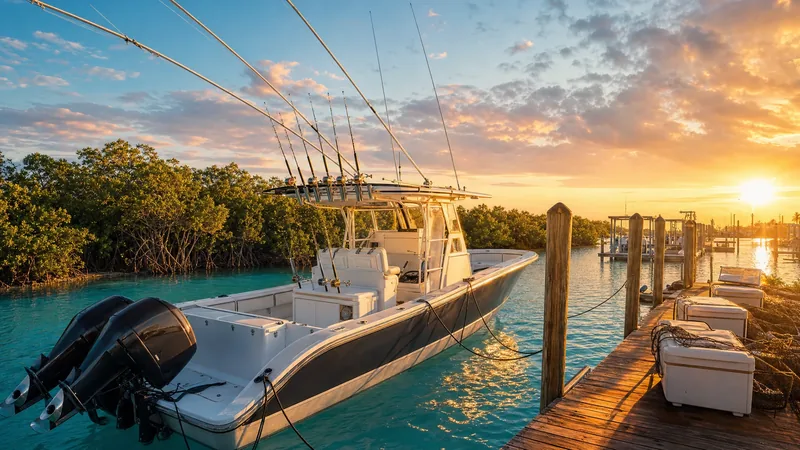
How to Start a Fishing Charter Business in Florida
How to Start a Fishing Charter Business in Florida
Starting a fishing charter in Florida involves two tracks that run side by side. The first is licensing: you need the right credentials to take paying customers out on the water. The second is business formation: you need a registered company, the right tax registrations, and a local tax receipt where your city or county levies one. Most captains handle the credentials first, then form the business, then register for taxes. This guide follows that order, with the fees, the agency that handles each step, and the mistakes that cost people time and money.
Informational content, not legal or tax advice. This article explains how the process generally works in Florida. It is not legal, tax, or insurance advice. Licensing rules, fees, and deadlines change, so confirm each one with the agency named before you pay or file. For decisions about business structure, taxes, liability, or vessel insurance, consult a Florida attorney and a CPA.
What You Need Before You Start
Gather these items before you file anything, since several steps depend on the ones before them:
- A U.S. Coast Guard credential: either an OUPV, commonly called the 6-pack license, or a master license
- Your FWC saltwater charter captain or charter boat license for saltwater trips
- A business name you have checked against Sunbiz records
- A Florida street address for your registered agent (a P.O. box will not work)
- Your vessel's registration, documentation, and proof of insurance
- A federal Employer Identification Number (EIN), obtained directly from the IRS
- A separate business bank account
- A budget that covers filing fees, license fees, and several months of operating costs before your first bookings pay out
Step 1: Decide Whether You Are Running Saltwater, Freshwater, or Both
Your license path depends on where you fish. Saltwater charters require FWC licensing. Freshwater guiding follows a different set of rules, covered in Step 5. Many new captains start with one lane, such as Gulf-side inshore trips or Atlantic offshore trips, and add the other later. Decide this before you buy a license, because the license you need depends on the largest group you plan to carry and the vessel you plan to use.
How to Get a Captain License in Florida
Step 2: Get Your Coast Guard Credential
The U.S. Coast Guard credential is the foundation of a paid charter operation. The OUPV license, commonly called the 6-pack license, is the entry-level credential for carrying paying passengers on an uninspected vessel. The master license is the higher-level credential, and either one can serve as your Coast Guard credential for the FWC process. Passenger limits and endorsements depend on the specific credential you hold, so confirm those details with the U.S. Coast Guard National Maritime Center before you rely on them in your marketing or your booking policy.
Step 3: Obtain Your FWC Saltwater Charter License
For saltwater trips, the Florida Fish and Wildlife Conservation Commission (FWC) issues the charter license. You choose between two types. A captain license is tied to you as the operator. A charter boat license is tied to the vessel. Both cover the saltwater fishing licenses your customers would otherwise need to buy for the trip. Customer capacity sets the fee, so choose the tier that matches the largest group you plan to carry, not the one you expect to carry most often.
| License | Customer capacity | Listed fee |
|---|---|---|
| Captain license | 4 or fewer customers | $201.50 |
| Captain license | 10 or fewer customers | $401.50 |
| Charter boat license | 6 or fewer customers | $401.50 |
For 11 or more customers on a USCG-inspected vessel, the listed fee is $801.50. Confirm with FWC which license type that tier applies to, and check the current amounts on the FWC website before you pay, since fees can change.
Step 4: Add Optional Snook and Lobster Permits
If your trips target snook or spiny lobster, you can add a charter snook permit ($10) or a charter lobster permit ($5). These are optional add-ons, not part of the base license. Confirm with FWC which permit your planned trips require before you advertise those species. A trip marketed for snook or lobster without the matching permit creates a compliance problem on the first booking.
How to Become a Fishing Guide in Florida: Freshwater Rules
Step 5: Understand the Freshwater Guide Requirements
Florida does not require a guide license for freshwater guiding, but the guide and each customer still need a recreational fishing license. That is the part many new operators miss. Because the freshwater rules look simpler on paper, the most common mistake is assuming no licenses apply at all. Confirm the current recreational license requirements with FWC before you advertise freshwater trips, and tell every customer in your booking confirmation that they need their own license.
Form Your Business in Florida
Step 6: Form an LLC with Sunbiz
You can operate as a sole proprietor without filing formation paperwork, but you then carry personal liability for the business. Most charter operators form a limited liability company (LLC) instead. Florida calls the formation document Articles of Organization, and the filing fee is $125. File through Sunbiz eFile, which is run by the Florida Department of State, Division of Corporations.
Your LLC name must end with Limited Liability Company, LLC, or L.L.C., and it must be distinguishable on Department of State records. Search the name in the Sunbiz business search before you file. If you need time to decide, you can reserve the name for 120 days for a $25 fee. Do not treat a name as approved until you receive a filing acknowledgment.
The Division publishes no guaranteed turnaround. Online filings are processed in the order received, and images of electronically filed documents post within 3 business days of processing. Florida does not offer expedited filing. If you need speed, walk-in service is available at 2415 N. Monroe Street, Suite 810, Tallahassee, Monday to Friday, 8am to 5pm, where most requests are completed while you wait.
Step 7: Appoint a Registered Agent
Every Florida LLC must designate a registered agent with a physical Florida street address. The agent must sign to accept the appointment. You can serve as your own registered agent if you are an owner, but an entity cannot serve as its own agent. The $25 designation fee for an LLC is included in the $125 filing fee, and changing the agent later costs $25.
Step 8: Register a Fictitious Name if You Need One
If you plan to operate under a trade name, such as 'Gulf Coast Light Tackle Charters,' that differs from your LLC's legal name, you need a Fictitious Name Registration. Registration costs $50 and is valid for five years, expiring December 31 of the fifth year. Renewal costs $50 and is filed between July 1 and December 31 of the expiration year. The registration is filed statewide with the Department of State, not with your county. Florida also requires the name to be advertised at least once in a newspaper in the county of your principal place of business, though no proof of advertisement is filed. File through the Sunbiz fictitious name registration page.
Step 9: Calendar Your Annual Report
An LLC files an annual report each year between January 1 and May 1, at a fee of $138.75. Reports received after May 1 carry a $400 late fee, bringing the total to $538.75. Failing to file by the third Friday in September leads to administrative dissolution. Put the January 1 opening date and the May 1 deadline on your calendar the day you form the company.
Tax Registrations and Local Receipts
Step 10: Handle Your Tax Registrations
Florida has no personal income tax and no state franchise tax on LLCs. Your federal tax classification determines your Florida filing. An LLC classified as a partnership or disregarded entity generally does not file a Florida corporate income tax return. A Florida Partnership Information Return is required if one or more owners is a corporation, and any corporate owner must file its own Florida corporate income or franchise tax return. An LLC classified as a corporation for federal tax purposes pays the 5.5% Florida corporate income tax. Ask your CPA which rules apply to you before you choose a structure.
The state sales tax rate is 6%. If your business sells taxable goods or services, you must register as a sales and use tax dealer with the Florida Department of Revenue before you begin business. Confirm with the Department whether your charter fees are taxable, and how any add-ons you sell, such as tackle or gear rentals, are treated, before you publish prices. Register through the Department of Revenue registration page.
Step 11: Check for a Local Business Tax Receipt
Florida issues no general statewide business license. Many Florida counties and cities levy a Local Business Tax Receipt under Chapter 205. That receipt is a tax, not proof that you are qualified to run a charter, and not every county or city levies one. Check with the local tax collector for the address where you base your boat. Trips often launch in one county and end in another, so confirm the rules for any launch location you use regularly.
Step 12: Set Up Insurance, Vessel Paperwork, and Booking Rules
A Florida license does not replace marine liability coverage. Talk with a marine insurance agent before your first paid trip, and ask specifically about passenger coverage, vessel coverage, and any crew. Keep your vessel registration current and keep the required documents on board. Write a booking policy that addresses cancellations, weather, and waivers, and have an attorney review it. The policy should describe only what your insurer actually covers.
Expected Results
A properly licensed, registered, and insured charter is in a position to accept bookings legally and operate on a professional footing. Many new captains report a slow first season while they build reviews, repeat customers, and a booking calendar. Results depend on your market, your vessel, the season, and your marketing, and no outcome is guaranteed. Build your budget around a slower start rather than your best month.
Common Mistakes to Avoid
- Choosing a customer tier based on your average trip size instead of your largest possible group, then carrying more customers than your license covers.
- Assuming a freshwater trip needs no license at all. The guide and each customer still need a recreational fishing license.
- Advertising snook or lobster trips before confirming whether the charter permit applies.
- Treating a name as reserved or approved before you have a filing acknowledgment.
- Missing the May 1 annual report deadline and paying the $400 late fee, or worse, letting the LLC reach administrative dissolution.
- Assuming sales tax never applies to charter fees without checking with the Department of Revenue first.
- Using a P.O. box as your registered agent address.
- Mixing personal and business money in one account, which makes tax filing and liability protection harder.
Tips for a Smoother Launch
- Start the Coast Guard and FWC paperwork early, since those credentials determine what you can sell.
- Set your prices after you know your tax treatment, so your published rate does not change after your first booking.
- Run a Sunbiz name search before you order boat wraps or printed marketing.
- Keep one folder with your licenses, filing acknowledgments, the annual report calendar, and insurance certificates.
- Ask a CPA to review your LLC tax classification before your first tax year closes, not after.
Before you take your first paying customer out, consult a qualified Florida attorney and a CPA on your structure, tax treatment, and insurance. Those decisions are specific to your situation, and this article cannot make them for you.
Keep exploring: related Florida guides
- How to Start a Boat or Jet Ski Rental Business in Florida
- How to Start a Vacation Rental in Key West
- How to Start a Bounce House or Party Rental Business in Florida
- How to Start a Vacation Rental Near Orlando
- How to Start an LLC in Florida
- Florida Business License
- How Much Does It Cost to Start a Business in Florida
- All Florida business types
- Every Florida guide in one place