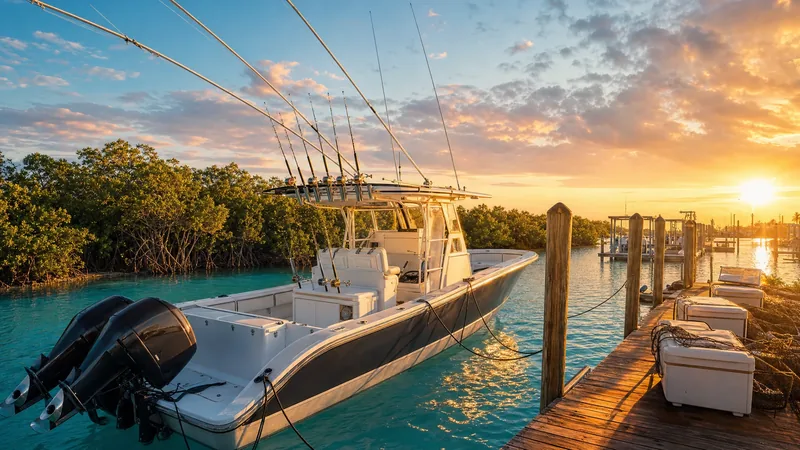
How to Start a Boat or Jet Ski Rental Business in Florida: FWC Livery Permit
How to Start a Boat or Jet Ski Rental Business in Florida: FWC Livery Permit
If you plan to rent boats, jet skis, or kayaks to visitors in Florida, the permit you need to understand first is the FWC Livery Operator Permit. Most people searching for a florida boat rental license, a florida jet ski rental license, or a florida livery license are really looking for this one requirement. It is not a general business license, and it is only one part of the paperwork. This guide follows the order most owners use, from forming the business to the moment your first customer steps onto the dock.
This article is informational, not legal or tax advice. Florida rules change, and counties and cities set their own requirements. Talk with a Florida business attorney and a CPA before you sign a lease, buy a fleet, or sign an insurance policy. Confirm every figure below with the agency named before you rely on it.
What you need before you start
Gather these items before you file anything or buy a single vessel:
- A business name that ends in LLC, or a plan to register a fictitious name
- A registered agent with a physical Florida street address (no P.O. Box)
- A federal Employer Identification Number (EIN) from the IRS
- A written list of every vessel you plan to rent, with make, model, and hull identification number
- A signed dock, marina, or land-use agreement that allows commercial rentals at your launch site
- An insurance quote that meets the livery minimums described below
- Rental agreement, waiver, and written safety procedures
- Staff who have completed a NASBLA-approved boating safety course
- Personal flotation devices (PFDs) and other required safety equipment for every vessel and every customer
- A budget that covers state filing fees, any local tax receipt, and annual renewals
Step 1: Form your business entity
Most owners form a Florida limited liability company (LLC) before they buy boats or sign a dock lease. The Florida Department of State, Division of Corporations (Sunbiz) handles the filing at dos.fl.gov/sunbiz. Filing Articles of Organization costs $125 in total, which includes the $25 registered agent designation described below. The LLC name must end with Limited Liability Company, LLC, or L.L.C., and it must be distinguishable on the state's records.
Search the name at search.sunbiz.org before you file. Do not treat a name as approved until you receive a filing acknowledgment. If you need time to line up your dock and insurance, a name reservation costs $25 and holds the name for 120 days.
Every Florida LLC must designate a registered agent with a physical Florida street address. The designation carries a $25 fee for an LLC, and the agent must sign to accept the appointment. An LLC cannot serve as its own registered agent, but you or another individual can.
Plan for the annual report from day one. The LLC annual report fee is $138.75 and is filed between January 1 and May 1 each year. A $400 late fee applies to reports received after May 1, bringing the total to $538.75. If the report is not filed by the third Friday in September, the state can administratively dissolve the company, and a dissolved company cannot rent anything.
If you will operate under a name other than the LLC's legal name, such as a brand like Gulf Coast Watersports, register a fictitious name. Registration costs $50, renewal costs $50, and the registration is valid for five years. The name must also be advertised at least once in a newspaper in the county of your principal place of business, though no proof of the advertisement is filed.
Step 2: Register for taxes and check your local tax receipt
Florida has no personal income tax and no general state business license. An LLC taxed as a partnership or disregarded entity generally does not file a Florida corporate income tax return, but a Florida Partnership Information Return is required if one or more owners is a corporation, and that corporate owner must file its own return. An LLC taxed as a corporation for federal purposes pays the 5.5% Florida corporate income/franchise tax. Ask a CPA which treatment fits your ownership before you file your first tax return.
Sales tax is the step most new renters miss. Businesses that sell taxable goods or services must register as a sales and use tax dealer with the Florida Department of Revenue before they begin business. Ask the Department whether your rental charges are taxable. If they are, register at floridarevenue.com before your first booking. The state sales tax rate is 6%, and you should confirm how any local rate applies to your location.
The local business tax receipt is a separate item. It is issued under Chapter 205, and it is a local tax, not a competency license. Not every county or city levies it, so check with the county tax collector and the city clerk for the address where you will operate. A receipt issued for a dock in one county does not cover a second launch site in another.
Step 3: Confirm zoning and dock rules
Zoning is local, and it can stop a rental operation even when your state paperwork is complete. Contact the county planning or zoning department that covers your launch site and ask whether a commercial boat or watercraft rental is a permitted use at that location. Ask the marina owner too, because a dock lease may restrict vessel storage, fueling, loading zones, and rental volume.
Get both answers in writing. A verbal yes from a marina manager does not protect you if the county later issues a violation notice. If the site is not zoned for rentals, look for a different location before you buy a fleet.
Step 4: Apply for the FWC Livery Operator Permit
This is the permit that makes your business a livery under Florida law. The Boating Safety Act of 2022 (SB 606) created the requirement, and it has applied since January 1, 2023. The permit has no cost and must be renewed each year. Operating a livery without the permit is a first-degree misdemeanor.
Apply through the Florida Fish and Wildlife Conservation Commission (FWC) at myfwc.com. Confirm the current application method, the documents the agency asks for, and whether it requires any inspection before it issues the permit. Do not advertise, take deposits, or accept bookings until you hold the permit in hand.
Some owners assume a kayak or canoe operation sits outside the livery rules. Do not assume that. Whether a human-powered-only fleet needs the permit depends on how the livery definition applies to your vessels, so ask FWC for a written answer that covers your exact fleet.
Step 5: Buy livery insurance
Florida requires livery insurance of at least $500,000 per person and $1,000,000 per event. Those are minimums, not targets. Jet skis and high-horsepower boats carry more crash exposure than kayaks, so ask your agent whether a higher limit makes sense for your fleet.
Ask the agent to confirm three things in writing: that the policy covers the rented vessels, that it covers your staff while they instruct and operate, and that it covers the dock or launch activity you are actually running. Florida's livery rules also require you to offer renter coverage. Explain in plain language what your renter coverage or damage waiver includes and what it excludes, and keep a signed copy with each rental agreement.
Step 6: Set your age rules
Under section 327.54 of the Florida Statutes, a livery may not rent any non-human-powered vessel, including personal watercraft, to anyone under 18. Build that rule into your booking flow instead of relying on the customer to self-report. Check a government-issued photo ID at booking and again at check-in, and record the name of the adult who signed the rental agreement.
The statute targets non-human-powered vessels, so it does not, on its face, reach paddle craft such as kayaks. Confirm that reading with FWC, and set your own minimum age for kayaks and paddleboards in your written policy so that every staff member applies the same rule.
Step 7: Train staff and give pre-ride instruction
Florida requires pre-rental and pre-ride instruction. The staff member who gives it must have completed a NASBLA-approved boating safety course. Keep each certificate in a staff file, and do not let anyone teach a rental until their paperwork is on file.
Each customer should receive instruction before leaving the dock. A practical checklist covers how to start and stop the vessel, how the throttle and engine cut-off switch work, how to read the posted rules for the water body, how to handle a capsize or fall overboard, and what to do if the engine dies. For jet skis, add a clear demonstration of turning and braking, and require the customer to show that they can perform the basic maneuvers before they leave the dock.
Write down what each customer was told and have them sign it. If an incident reaches a claim, a written record of instruction is one of the first things the insurer and the attorney will ask for.
Step 8: Stock PFDs and required safety equipment
Florida requires PFDs and other required safety equipment on site. Keep PFDs in a full range of sizes, including youth and infant sizes if you accept children on any vessel that allows them. Sanitize and inspect PFDs between rentals, and retire any that are torn, faded, or missing straps.
Build a per-vessel equipment checklist that matches the requirements for each vessel class and that your staff signs off before every departure. Confirm the exact equipment list with FWC and the U.S. Coast Guard for your vessel types, because the requirements differ by boat size and by how the vessel is used.
Step 9: Build a renewal calendar
Florida rental businesses have several recurring deadlines, and missing one can shut you down. Put these on a shared calendar:
- FWC Livery Operator Permit: annual renewal
- Sunbiz LLC annual report: January 1 to May 1 each year
- Fictitious name renewal: July 1 to December 31 of the expiration year, if you use a trade name
- Local business tax receipt: renewal according to your county or city schedule
- Sales tax filings with the Department of Revenue, if you are registered
- Insurance renewal, with a copy of the new certificate on file for the FWC permit
- Staff training records and any refresher training your staff need
How to start a jet ski rental business in Florida
Searches for a florida jet ski rental license and florida jet ski rental laws usually turn up the same core requirement: the FWC Livery Operator Permit. Florida does not issue a separate jet ski license for the business, but personal watercraft carry the strictest rules in this guide. Plan for four specific points:
- The under-18 rule applies. No personal watercraft may be rented to anyone under 18.
- Pre-ride instruction is mandatory, and it should include a demonstration the customer completes on the water or at a supervised area.
- Insurance matters more. Confirm your policy's limits and renter coverage against the crash risk of personal watercraft.
- Dock and zoning rules often restrict where personal watercraft can launch, store, and refuel. Confirm both before you sign a lease.
Ask FWC whether any other operator-side requirements apply to your renters, such as boating safety identification, because those rules sit outside the livery permit and are not covered in this guide.
How to start a kayak rental business in Florida
A kayak operation is the lowest-cost version of this business, but it is not the simplest from a permit standpoint. Searches for how to start a kayak rental business in Florida often assume that paddle craft are exempt from the livery rules. That assumption is risky. Get FWC's written answer on your exact fleet, form the LLC and register the name, confirm zoning at your launch, and carry the insurance the agency requires for your operation. The under-18 rule for non-human-powered vessels is a motorized-vessel rule on its face, but set your own age policy for paddle craft so your staff applies one standard.
Common mistakes to avoid
| Mistake | Why it matters | What to do instead |
|---|---|---|
| Taking bookings before the FWC permit is issued | Operating without the permit is a first-degree misdemeanor. | Hold the permit before you advertise or take deposits. |
| Assuming kayaks are exempt from livery rules | Your fleet type may still require a permit. | Get a written answer from FWC for your exact fleet. |
| Renting a jet ski to a 17-year-old | Florida bars renting non-human-powered vessels, including personal watercraft, to anyone under 18. | Check photo ID at booking and at check-in. |
| Carrying insurance at the minimum without review | Limits that fit a kayak fleet may not fit a jet ski fleet. | Ask the agent to confirm coverage for vessels, staff, and the launch site. |
| Assuming no local receipt is needed | Not every county levies the local business tax receipt, but many cities and counties do. | Check with the county tax collector and city clerk for each site. |
| Missing the May 1 annual report deadline | A $400 late fee applies after May 1, and the company can be administratively dissolved. | Calendar the filing for early spring. |
| Skipping staff training records | Without records, you cannot show the instruction was given by a qualified person. | Keep NASBLA course certificates on file for every instructor. |
| Starting on a dock that does not allow rentals | Zoning and marina rules can force a shutdown. | Get written confirmation from the county and the marina owner. |
Expected results
A properly permitted, insured, and documented rental operation may be better positioned to serve customers and to handle questions from regulators, insurers, and lenders. It may also reduce the chance of a fine or a shutdown caused by a missed filing. Results still depend on the location, the season, your pricing, your fleet, and how well you market the business. No state agency promises a revenue outcome, and neither does this guide.
Timing is also uncertain. Sunbiz does not publish a guaranteed turnaround for LLC filings. The Division processes online filings in the order received, and it does not offer expedited filing service. Walk-in service is available at 2415 N. Monroe Street, Suite 810, Tallahassee, Monday to Friday, 8am to 5pm, where most requests are completed while you wait. Plan your launch date around the permit and insurance approvals, not around a filing date you expect to hit.
Next steps and official resources
Start with the entity filing and the name search, then line up the dock agreement and the insurance quote, since both affect the FWC application. Keep a single folder with every filing receipt, permit, certificate, and written answer from an agency. That folder is what you will hand to an insurer, a lender, or an inspector.
- Florida Department of State, Division of Corporations (Sunbiz): dos.fl.gov/sunbiz
- Florida Department of Revenue: floridarevenue.com
- Florida Fish and Wildlife Conservation Commission (FWC): myfwc.com
- Florida SBDC Network: floridasbdc.org
- U.S. Small Business Administration, South Florida district: sba.gov/district/south-florida
This is informational content, not legal or tax advice. Florida livery operations involve insurance, safety, tax, and zoning decisions that depend on your facts. Before you open, have a Florida attorney review your rental agreement and waiver, and have a CPA review your entity and sales tax setup. Confirm every fee, deadline, and requirement in this guide with the agency that administers it, because the rules and figures can change.
Keep exploring: related Florida guides
- How to Start a Bounce House or Party Rental Business in Florida
- How to Start a Fishing Charter Business in Florida
- How to Start an Airboat Tour Business in Florida
- How to Start a Vacation Rental in Key West
- How to Start an LLC in Florida
- Florida Business License
- How Much Does It Cost to Start a Business in Florida
- All Florida business types
- Every Florida guide in one place